What causes knee pain?
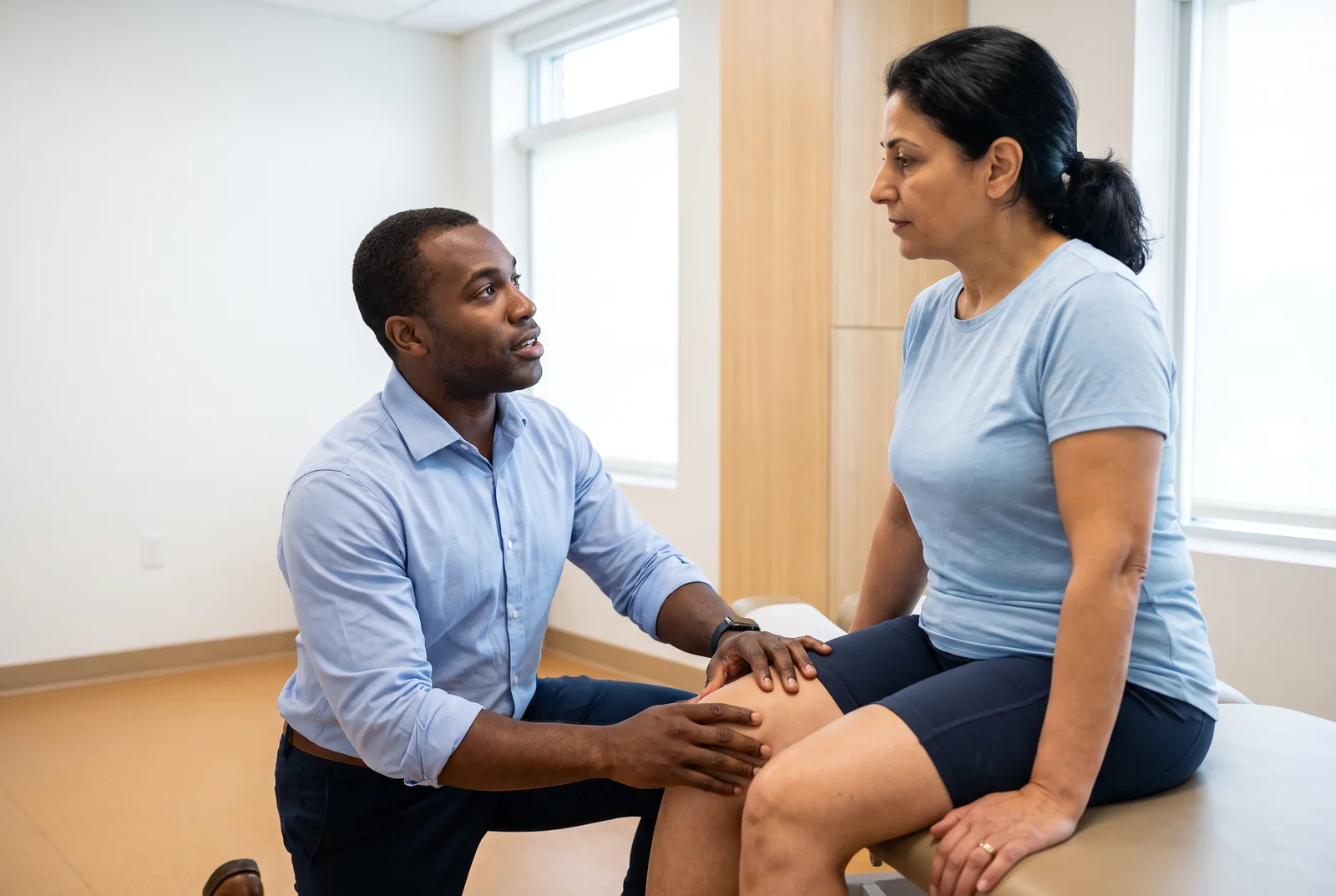
Knee pain rarely comes from one single event. The knee sits between two joints that both influence how it tracks and absorbs load, and when the muscles above or below it are weak, tight, or out of sync, the knee ends up doing work it was never built to handle. Figuring out which tissue is actually overloaded, not just where it hurts, is what separates a plan that works from one that just chases the pain around.
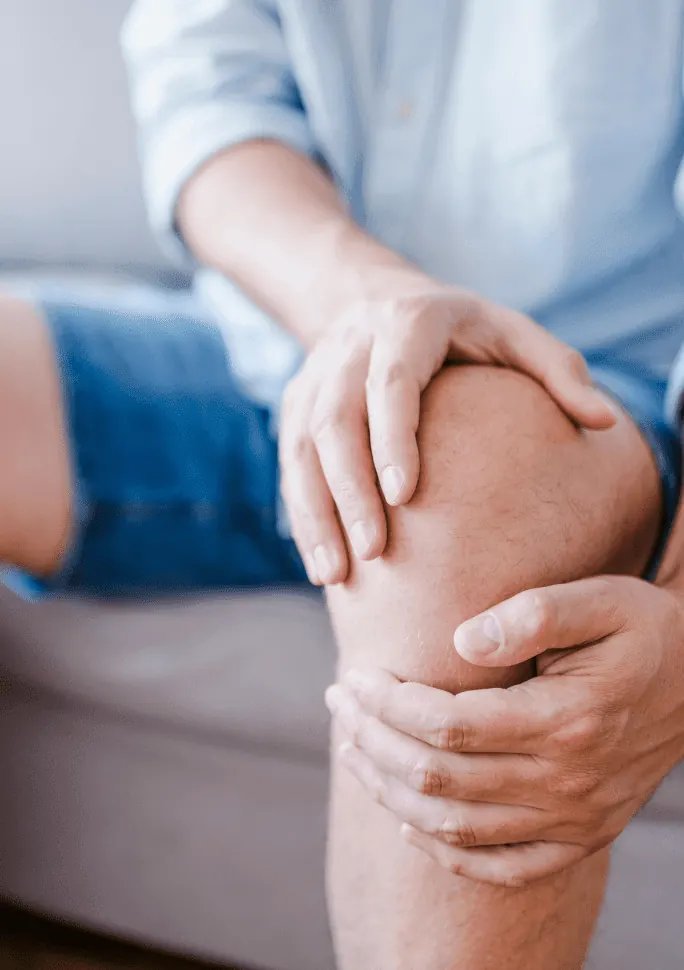
The kneecap needs to glide smoothly in its groove as you bend and straighten your leg. When the muscles that guide that motion are weak or unbalanced, the kneecap drifts off track and the cartilage underneath gets irritated with every step, squat, or stair. It is rarely the kneecap itself that is the problem. It is usually poor tracking, and that is fixable.
The meniscus is the cartilage cushion that absorbs shock inside the knee. Repetitive twisting, deep squatting, or simple wear over time can fray or tear it. Some tears need a surgical opinion, but a large number of meniscus problems calm down and function well once swelling is controlled and the knee is properly loaded and strengthened again.
The IT band is a thick band of connective tissue that runs down the outside of the thigh and attaches near the outside of the knee. When it gets pulled too tight, usually because the muscles that control the leg are underworked, it rubs and irritates the tissue below it. The result is a sharp, nagging pain on the outside of the knee, often worse with running or repetitive bending.
The tendons that connect your kneecap to your shin and thigh take on enormous load every time you jump, squat, or run. Doing too much too fast, or asking a tendon to work without the surrounding muscles sharing the load, leads to irritation and that deep, achy pain right at the front of the knee. Overuse tendon pain settles with the right amount of load, not with rest alone.
A twist, a pivot, or a sudden change of direction can stretch or partially strain the ligaments that stabilize your knee. Short of a full tear, most of these sprains respond well to a structured rehab plan that restores stability and control, so the knee stops feeling like it might give out from under you.
Your knee is a hinge with very little say in how your leg moves. That job belongs to the quads and the hip muscles above it. When those muscles are weak or fire late, the knee absorbs forces it was not designed to manage, step after step. Rebuilding that strength is often what finally gets a stubborn knee to quiet down.