What causes knee pain from osteoarthritis?
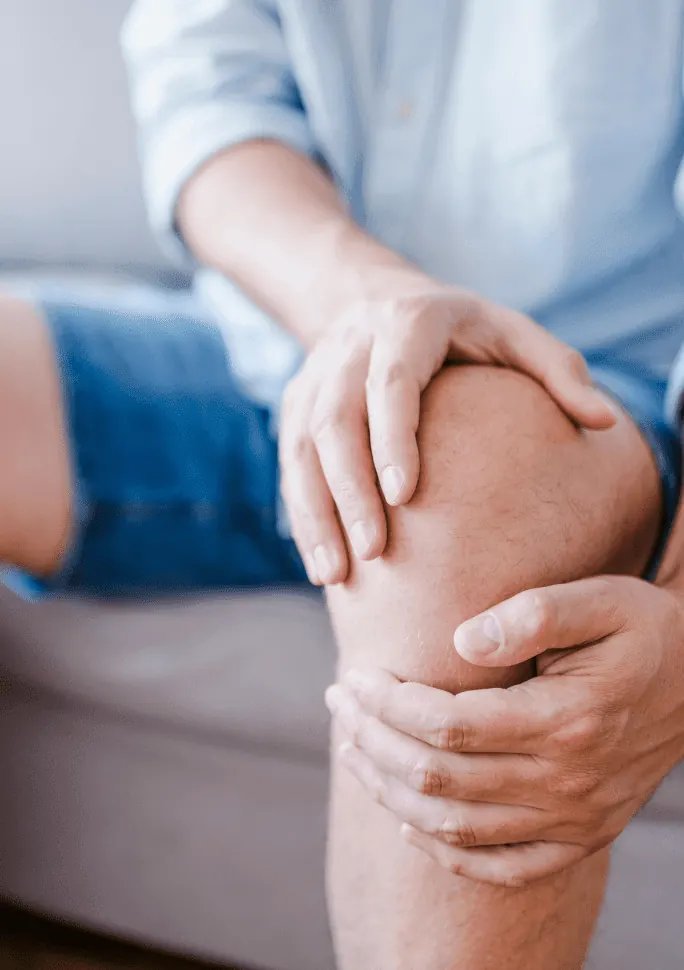
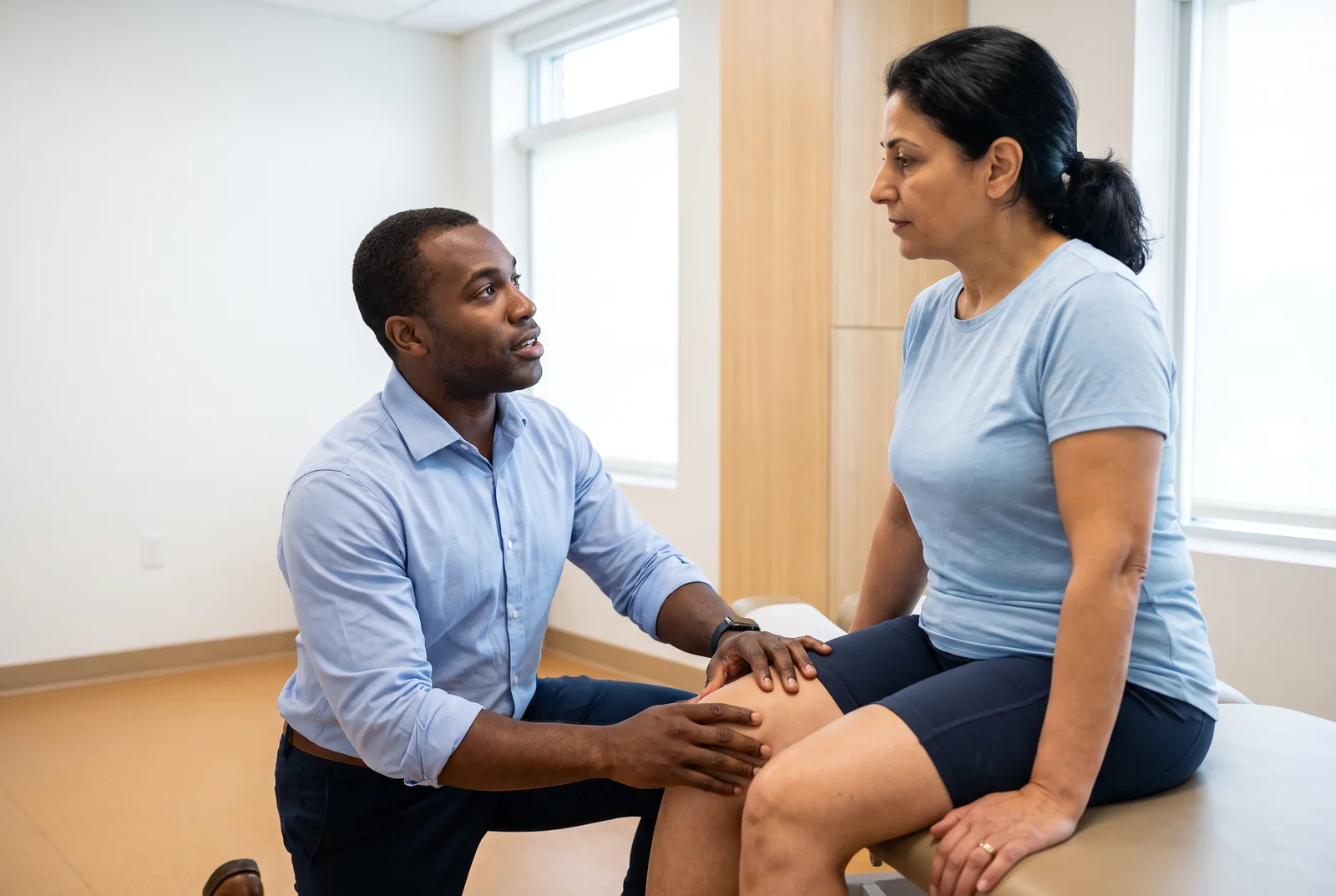
Knee osteoarthritis develops when the cartilage cushioning your knee gradually wears down. It rarely shows up overnight. It builds slowly, joint by joint, as the cushioning thins, the surrounding muscles lose their grip on the joint, and everyday movement starts to feel harder than it used to. Knowing exactly what stage that wear has reached is what lets you slow it down and stay ahead of it, instead of just managing the pain.
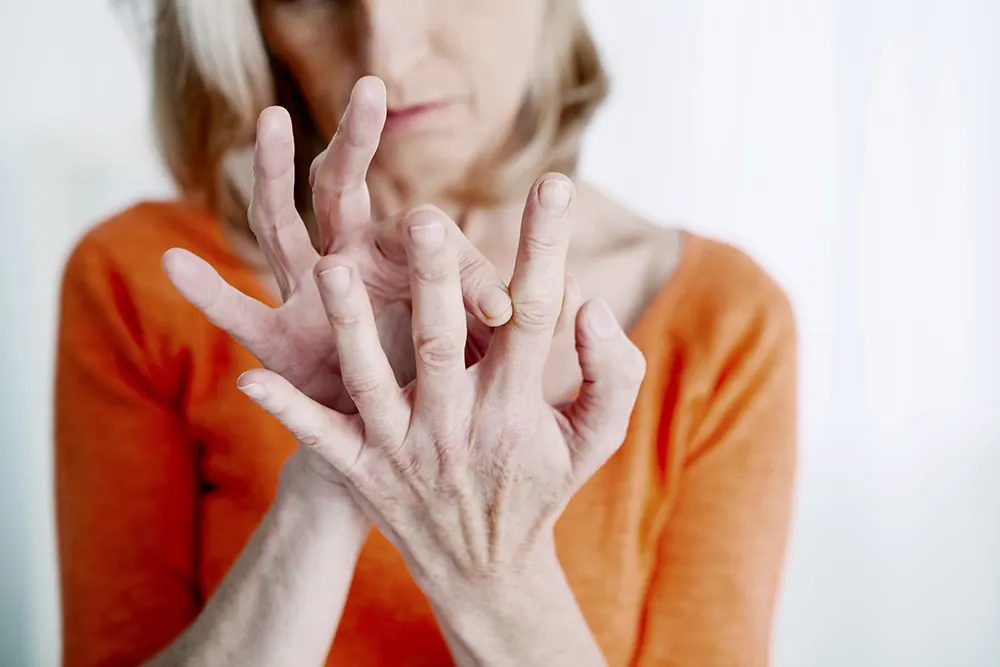
The cartilage in your knee is what allows the joint to glide smoothly with every step. Over time, that cartilage thins and roughens, and the joint loses the cushion it depends on. This wear is gradual, but once it starts, it tends to keep progressing unless the load on the joint is addressed directly.
An arthritic knee tightens up after periods of sitting, sleeping, or inactivity. You feel it most getting out of bed or standing up after a long car ride. The joint needs a few minutes of movement to loosen up because the tissues around it have stiffened while at rest.
As the cartilage wears down, the joint reacts with inflammation. You get flare-ups of swelling, warmth, and increased pain, often after a longer walk, a change in weather, or a day on your feet. These flare-ups come and go, but each one is a sign the joint is under more stress than it can handle right now.
Your quads and hip muscles are supposed to absorb a large share of the force that goes through your knee. When those muscles weaken, more of that load lands directly on the joint surfaces. Weak muscles do not cause the arthritis, but they let it get worse faster than it needs to.
Once cartilage wears down enough, the bones of the joint start making direct contact with each other. This is what people mean when they say bone-on-bone. Pain shows up most with standing, walking, climbing stairs, or any activity that puts weight through the knee.
Every extra pound of body weight multiplies the force that goes through your knee with each step. Add in less activity, which weakens the muscles that would otherwise protect the joint, and the wear accelerates. Managing weight and staying active are two of the most direct ways to slow the progression down.